01 · THE FAILURE
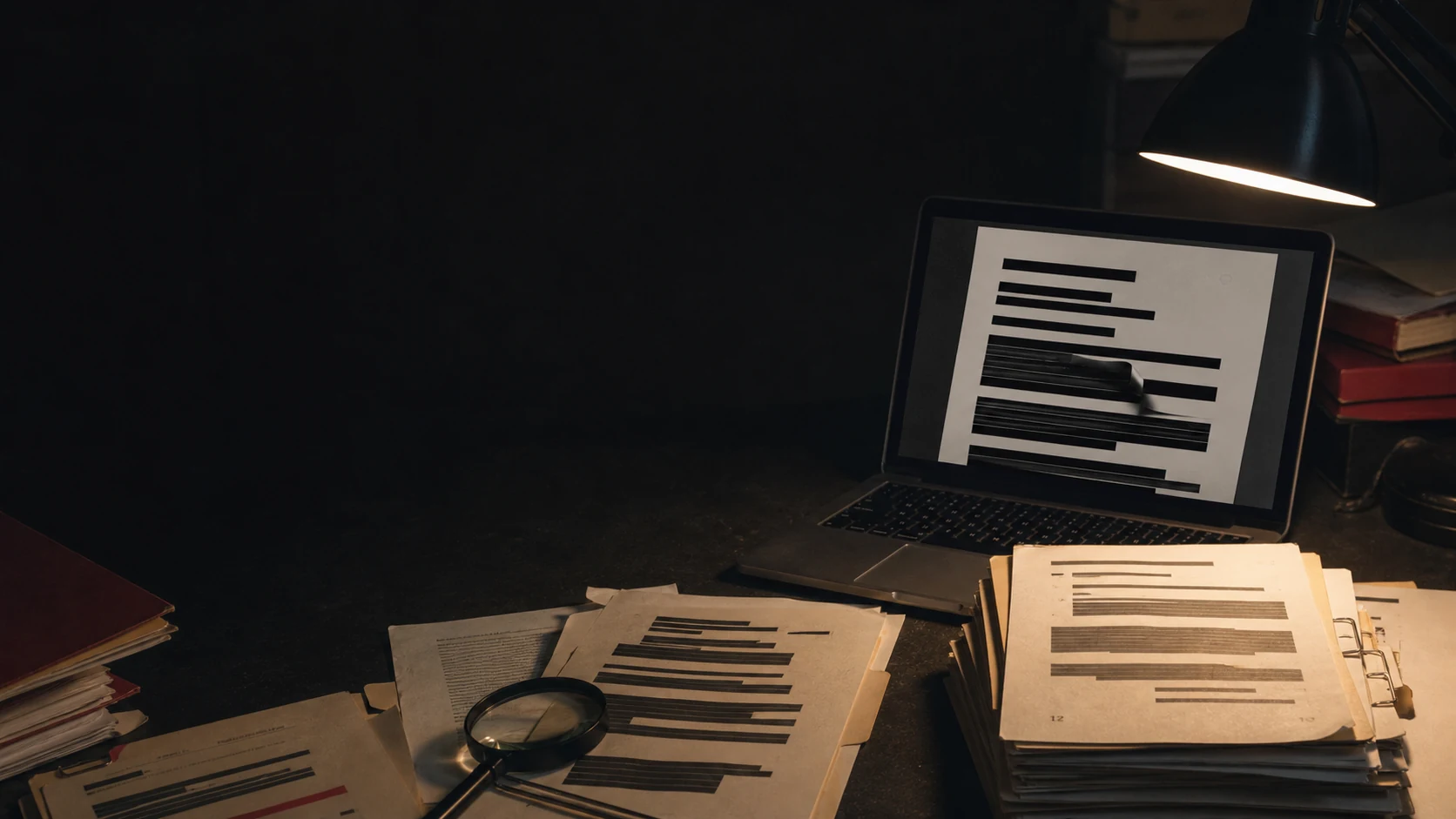
The black bars looked final. The file disagreed.
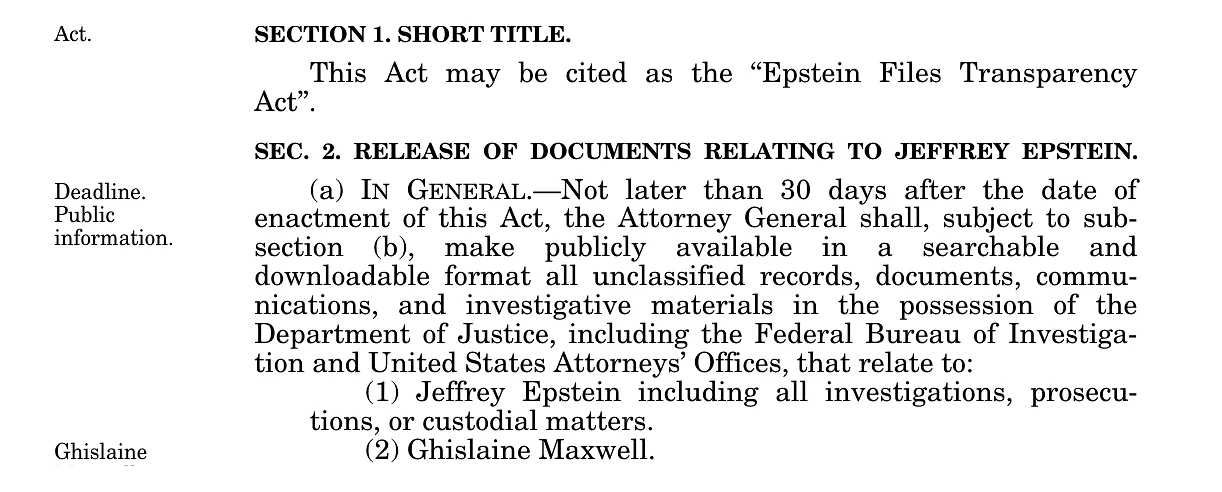
On December 19, 2025, the deadline ran out. The Epstein Files Transparency Act required the Department of Justice to publish its unclassified records in a searchable, downloadable form, while protecting victims and a narrow set of other sensitive material. What went online was not a single tidy archive. It was a rolling, contested dump pulled from different investigations, courts and file formats.
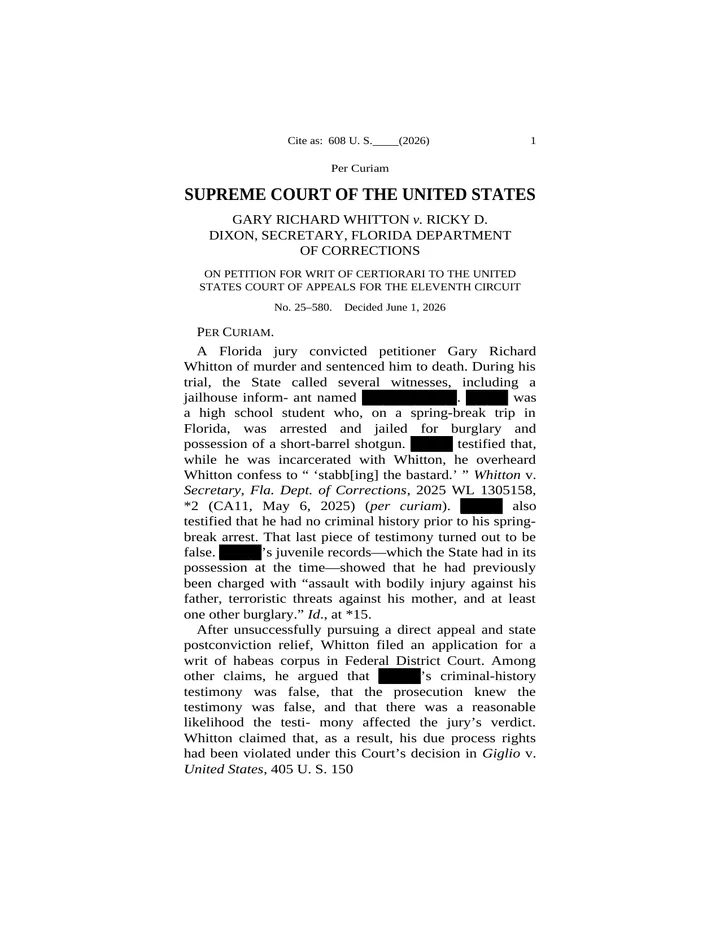
The scandal was contradictory. More than 500 pages in the initial release were completely blacked out, by a CBS News count. Yet survivors and their lawyers also said identifying information had been left exposed—and in some PDFs, The New York Times found that text hidden by black bars could be recovered by copying and pasting it elsewhere.
The archive managed to be over-redacted and under-redacted at the same time.
The central contradiction
02 · TIMELINE
Thirty days earlier, Congress started the clock.
A searchable archive—in 30 days
Public Law 119-38 is signed. It permits victim-protecting redactions, but requires the covered records to be searchable and downloadable, and forbids redaction for embarrassment, reputational harm or political sensitivity.
The deadline arrives before certainty does
The first production lands amid missing files, unexplained black pages and exposed information. Documents continue to appear, disappear and return as review continues.
The scale becomes visible
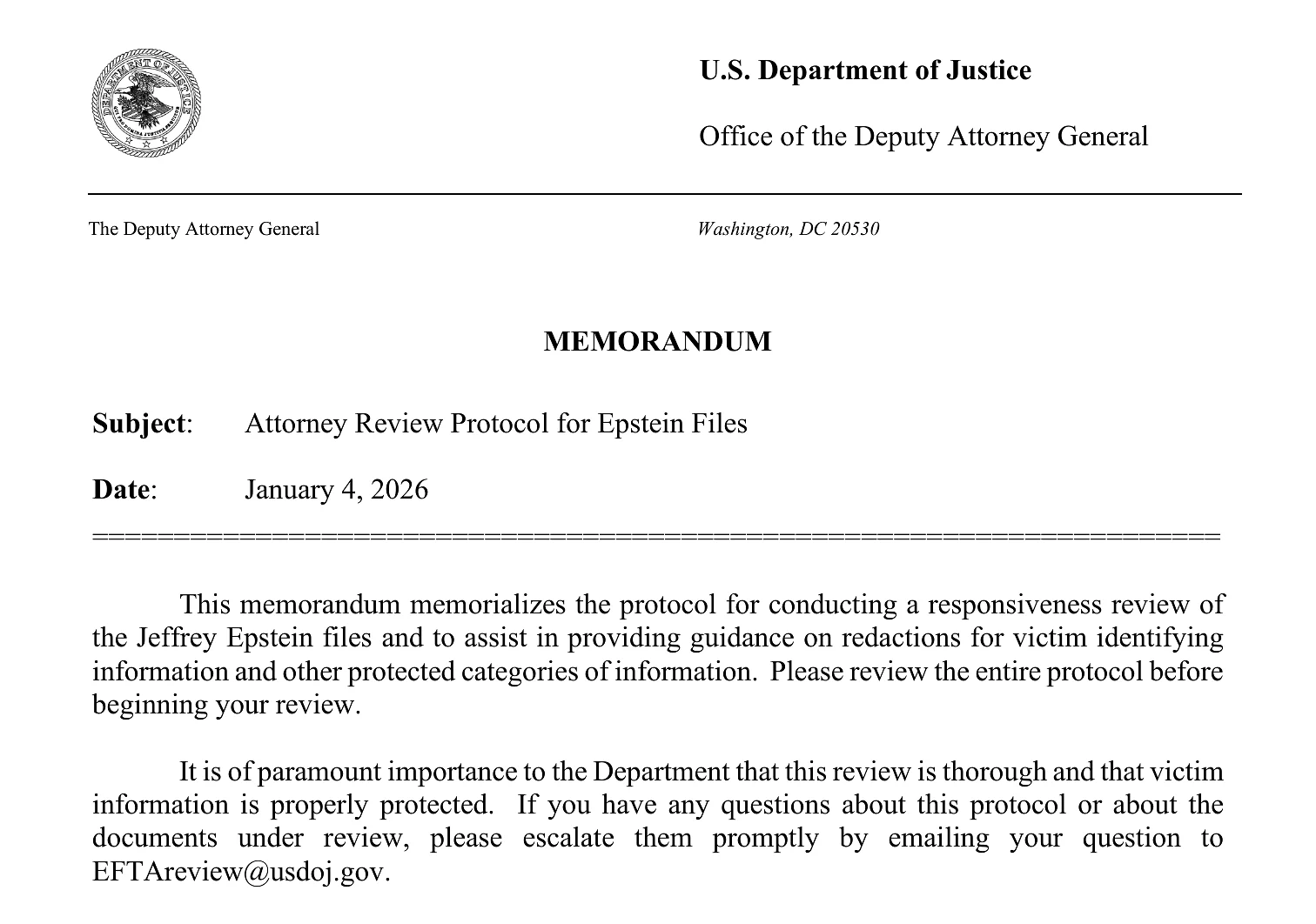
DOJ says more than 500 attorneys and reviewers worked on the effort and announces more than three million additional pages. Its letter describes document identification as substantially manual and iterative.
An inspector general opens an audit
The DOJ Inspector General begins reviewing collection, redaction guidance and how the department handled post-release concerns. The final explanation is still being examined.
03 · INSIDE THE FILE
A PDF is not a page. It is a set of instructions.
Your eyes see one flat sheet. A computer may see text glyphs, vector shapes, scanned images, annotations, form fields, metadata and an invisible OCR layer—all occupying the same coordinates. A black rectangle can be only the final instruction: draw this shape over everything that came before it.
So there are two different operations that produce the same picture. Only one of them removes anything.
What you see
Q.Please state the witness name and address.
A.
Q.Thank you. Nothing further.
What the file contains
Q.Please state the witness name and address.
A.Marta Reyes, 118 Grove Street, Springfield
Q.Thank you. Nothing further.
A black box is drawn over the name.
04 · WHY IT FAILED
Three failures, and none of them was the black bar.
Too many pages, too little time
The Justice Department had 30 days to review millions of pages. More than 500 attorneys and reviewers did the work by hand, document by document. When that many people make that many decisions that quickly, some of them will be wrong.
The reviewers were lawyers, not PDF experts
Their job was to decide what the law said to hide. They marked names in the review software and moved on. But marking a name is not the same as deleting it from the file, and nobody in that chain was asked to check which one had actually happened.
Nobody checked the result
No one checked whether the redacted PDFs had the information removed. No one searched the text for the names that were supposed to be gone. Had that been done, the mistakes could easily have been caught.
The only test that ever ran was whether the page looked right.
05 · A DIFFERENT WORKFLOW
A better workflow.
DocXee solves the above challenges by a better workflow. The three failures were speed, unfamiliarity with the file format, and no check at the end. Each one has an answer.
- 01
Tell it what to remove, in plain language
AI reads the document and finds the matches for you. The instruction can be broad, such as every woman’s name, or specific, such as the names of known victims and their associates. It works through the whole file in minutes rather than weeks, and the instruction can be written in any language.
- 02
Specify a page range
Optionally supply a page range to speed up LLM processing
- 03
DocXee pulls out the text
LLM specifies which words to remove and they are permanently deleted from the document. Copying, searching and text extraction all come back empty, because there is nothing left to find.
- 04
Track changes with built-in editor
Every change is marked up in the editor. Easy to find out if anything is redacted or left out by accident.
- 05
Compare the two files
As an additional check, generate a track-changes document for independent verification.
SOURCES
Sources and further reading
Editorial note: This article distinguishes documented facts from our technical analysis. Document images are reproductions of US federal government works. The Inspector General audit remains ongoing at the time of writing. Being named in the Epstein files is not, by itself, evidence of wrongdoing.